Most fashion brands approach their Shopify store the same way. They pick a theme that looks nice, install a handful of apps that promise to boost sales, and wait. When sales are slow, they install more apps. When the store starts feeling sluggish, they wonder why ads are not converting.
The app is usually the problem, not the solution. Every app you install loads additional JavaScript on every page of your store. Three apps means three extra scripts. Seven apps means seven. By the time most stores reach me, they are running twelve or fifteen apps and their Core Web Vitals scores look rough.
As a Shopify developer in India who has built over 25 custom stores for fashion brands, I started doing things differently a while back. I stopped using apps for core features and started building them in Shopify Liquid. Here is what that actually looks like in practice.
Why the Shopify App Store Is the Wrong Answer for Fashion Brand Problems
Apps are built to work for everyone. That sounds good on paper. In practice, it means they are designed for no one in particular. A Shop the Look app that works for a homeware brand looks and behaves differently from what a fashion brand actually needs. It ships with its own fonts, its own button styles, its own layout logic. None of it matches what the brand spent months building.
There is also the cost question. Most useful Shopify apps charge anywhere between fifteen and a hundred dollars per month. That is AMC forever. Even if the feature is simple, you are renting it indefinitely. And if the app shuts down or changes pricing, you lose the feature.
When I build a feature from scratch in Liquid, it is part of the theme. It loads with the page, matches the brand design exactly, and belongs to the client permanently. No monthly charge. No third-party dependency. No performance hit.
When you hire a Shopify expert in India who codes from scratch, you are not renting features. You own them outright, forever.
What a Shopify Expert in India Builds for Fashion Brands Instead of Installing Apps
These are five features I have built repeatedly for fashion stores across India. Each one was built to solve a specific problem I kept seeing, and each one is written in Liquid code so it lives inside the theme permanently.
Feature 01
Shop by Color - When Customers Browse by Color, Everything Changes
Fashion is bought by color more than by category. In a physical store, a customer walks past a rack, spots a shade she likes, and picks it up. Online, that experience breaks entirely. She types something into search or browses through pages of thumbnails hoping to find the right color. Most do not bother long enough. They leave.
I built an interactive color wheel directly on the storefront. A customer taps any color on the wheel and every matching product appears instantly below. No page reload, no separate search, no filter sidebar to navigate. One tap and the catalog reorganizes itself around what she actually wants to see.
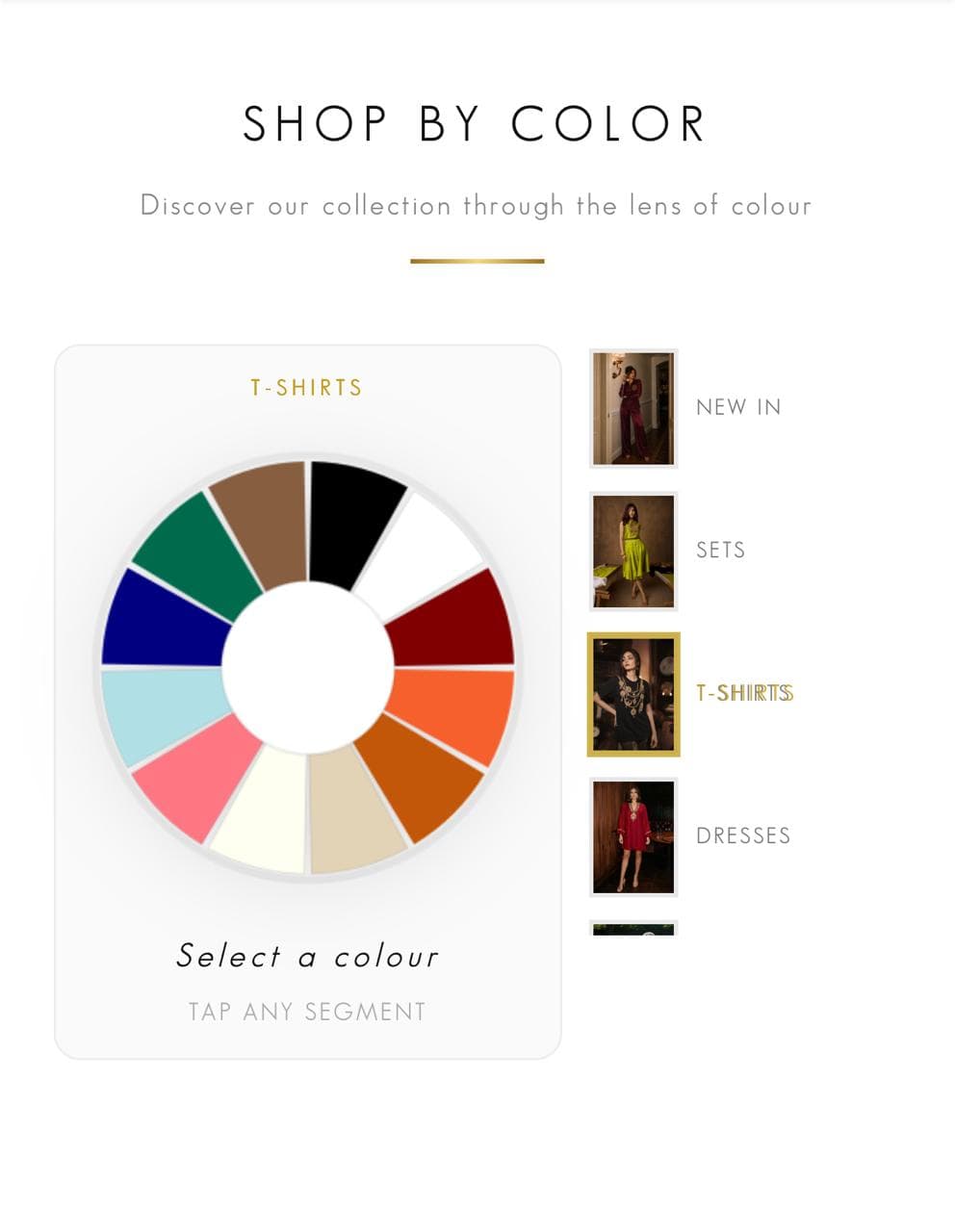
After adding this to one store, products that had not moved in months started getting orders within weeks. They were always there. The customer just could not find them. There is also a real marketing benefit: a single reel or Instagram ad can now show your entire color range in one frame instead of one product at a time.
Built in Liquid. No app, no monthly charge, no performance hit.
Colors that were invisible before become discoverable overnight.
One piece of content now sells your entire range.
Looks and feels like part of the store, not a plugin.
Feature 02
Shop the Look - Sell the Full Outfit, Not Just the Piece They Landed On
When a customer lands on a product page, she is already interested. She is engaged. That is the exact moment when showing her the full look can push the order from one item to three or four. Most stores miss this because they only show the product in isolation.
I build Shop the Look as a section that appears on the product page, showing the complete styled outfit. Every item in the look is clickable. She can add any piece or all of them to cart from the same page without navigating away. The section is custom-coded to match the brand design exactly so it does not look like a feature that was bolted on.
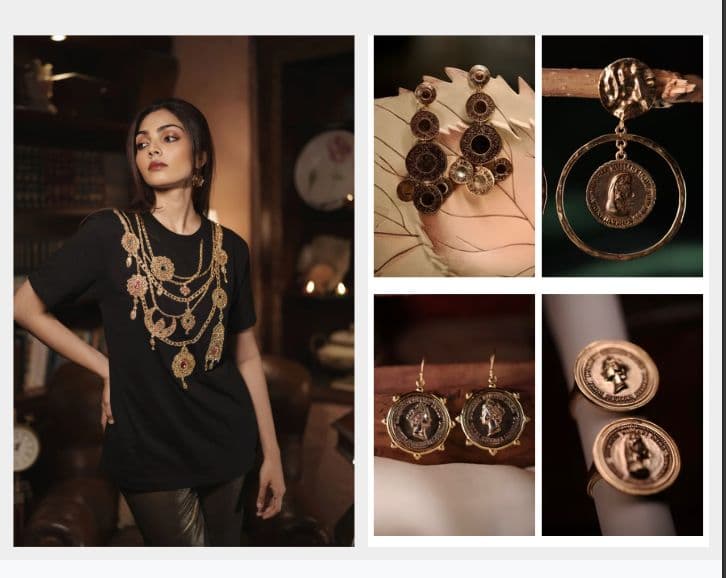
Fashion buying is impulsive. The moment you make her leave the page to find a related item, you have given her a reason to pause. And pausing is where sales die. Keeping everything in one place, styled together the way a customer imagines wearing it, changes the purchase behavior.
Complete outfit shown on the product page. No redirects.
Every item is individually clickable and addable to cart.
Coded to match brand design. Does not look third-party.
Fashion stores see average order value increase after this is built.
Feature 03
Quick Color Preview - See Every Color Variant on the Collection Page Without Extra Clicks
Standard Shopify collection pages show one product image per card. If a product comes in eight colors, the customer sees one. To see the rest, she has to open the product, scroll through variants, come back, open the next one. Most do not.
This feature puts color swatches directly on the product card in the collection view. When a customer hovers or taps any swatch, the product image updates immediately to show that color. She can scan all her options from the collection grid without ever leaving the page.
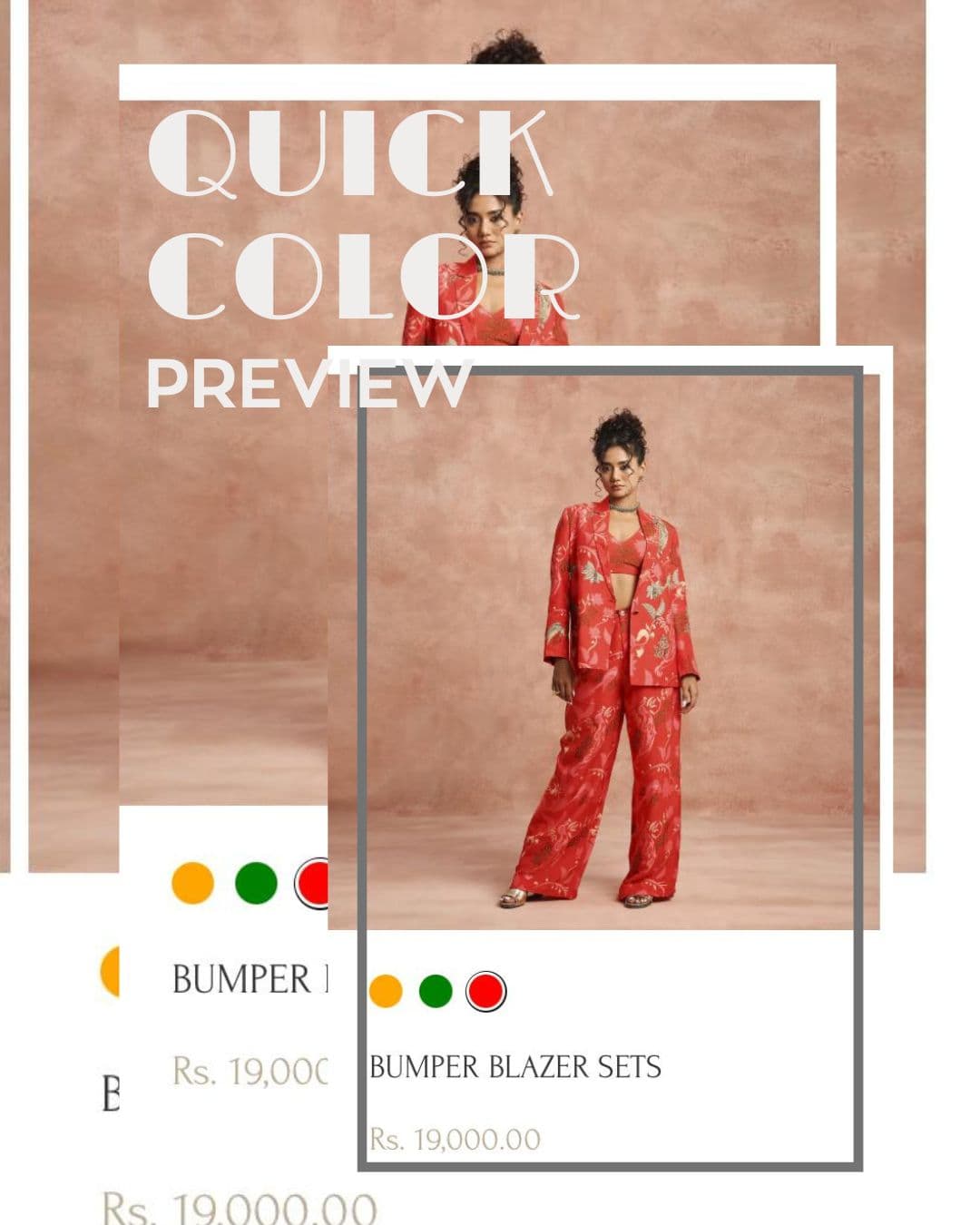
For fashion stores with deep color catalogs, this alone cuts the steps a customer has to take before deciding to buy. Fewer steps means fewer drop-offs. The code lives in the theme, runs natively, and adds no load time to the page.
Customers see all colors on the collection page in one glance.
Photo updates on hover or tap with no page reload.
Reduces the number of clicks before a customer reaches checkout.
No app. Native code. Faster browsing experience.
Feature 04
Custom Measurement Form - The Sizing Feature That Actually Reduces Fashion Returns
Sizing is one of the biggest reasons fashion customers do not complete a purchase. They are not sure if the size will fit, they cannot risk a return, and so they close the tab. Standard size charts help, but they are a compromise. For made-to-measure or custom-fit brands, they are not enough.
I built a custom measurement form that lives directly on the product page, sitting alongside the standard size options (S, M, L, XL). The customer can choose "Custom" as a size and a clean measurement form expands for them to fill in their exact measurements. Chest, waist, hip, length, whatever the brand needs. That data comes through with the order to the merchant.
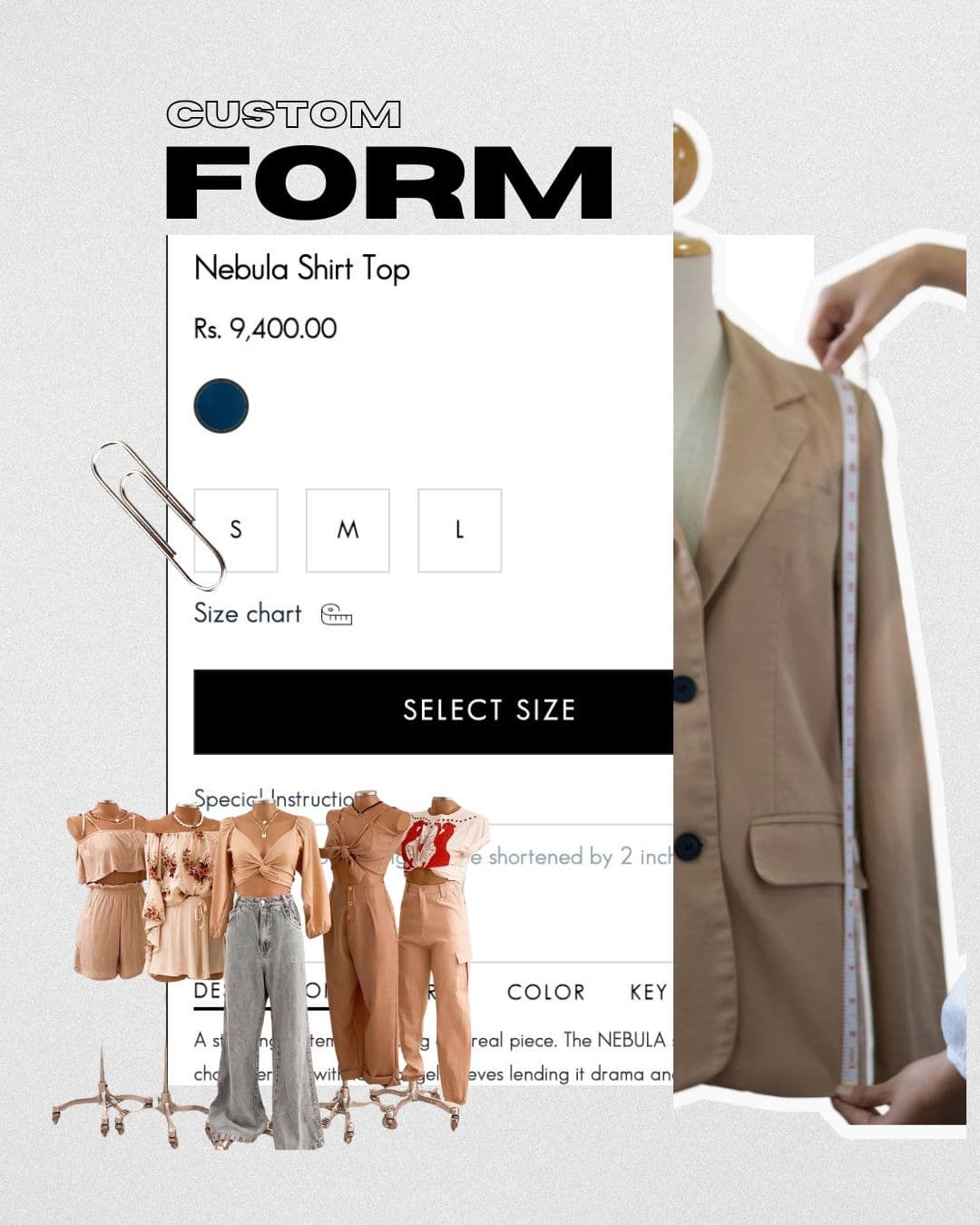
This works for ethnic wear brands doing made-to-order, for boutique brands that offer custom tailoring, and for any store where fit is the primary reason customers hesitate. It removes the hesitation by giving the customer control over how the garment is made.
Custom size option sits naturally next to S, M, L in the size selector.
Measurement form expands cleanly on the product page. No popups.
Customer measurements come through with the order for seamless fulfillment.
Reduces returns from wrong-fit orders. Increases customer confidence.
Feature 05
Custom Chatbot - A Shopping Assistant Built for Your Store That Is Available 24/7
Most chatbots on Shopify stores are generic. They show a floating bubble with a message that says "How can I help you today?" and then fail to answer anything specific about the store. Customers ask something real, get a useless response, and lose trust.
I build chatbots that are pre-programmed with the brand's actual information. Sizing, shipping timelines, product materials, care instructions, common questions about fit. The bot acts like a well-briefed store assistant that has read every page of the store and knows every FAQ. It also guides customers to the right collection or product based on what they describe.
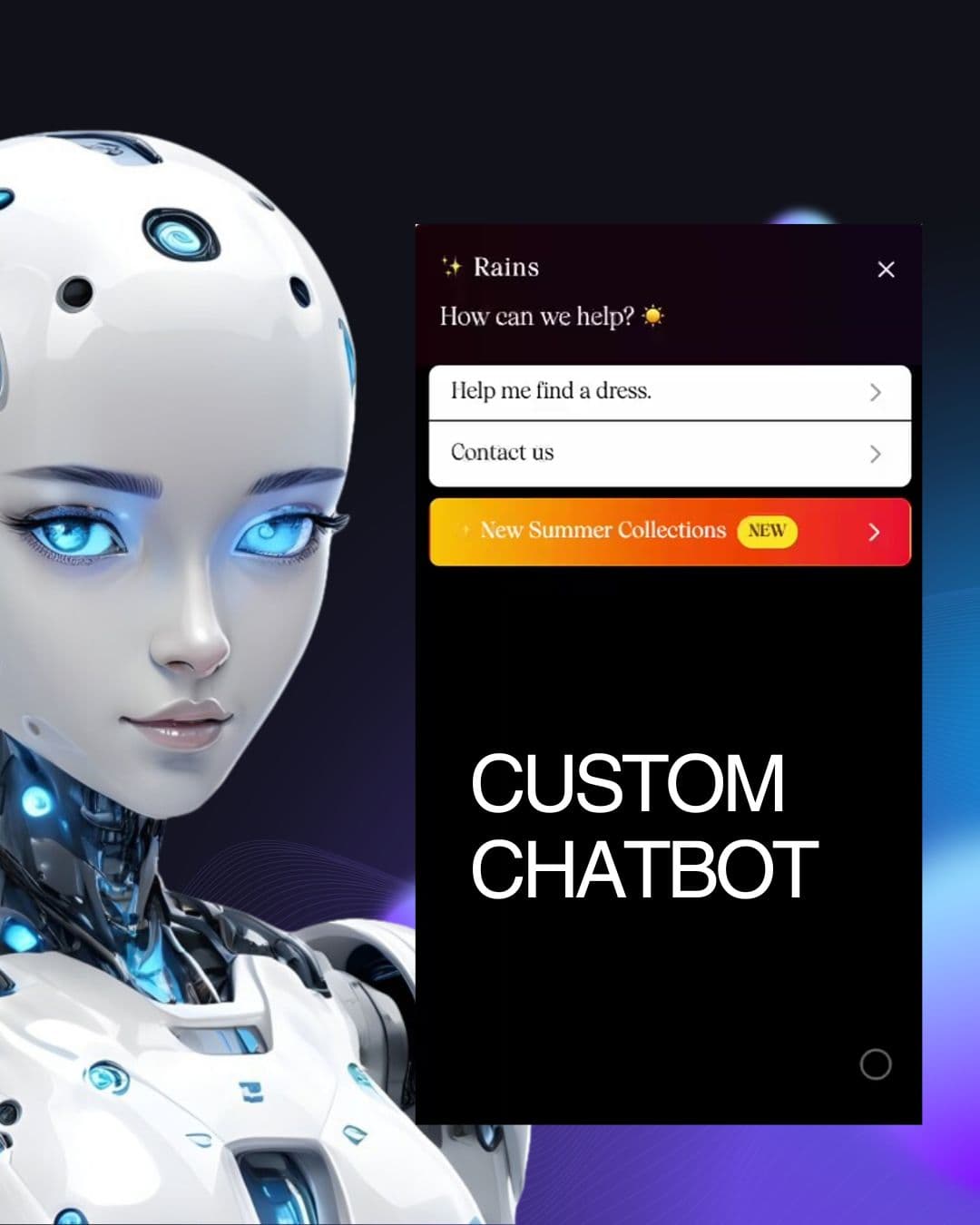
For fashion brands that get a lot of pre-purchase questions on WhatsApp or email, this takes a real load off the support team while keeping customers on the store longer. A customer who gets a helpful answer does not leave to find it somewhere else.
Pre-programmed with your actual product and brand information.
Guides customers to the right products and collections.
Reduces support workload. Answers common questions automatically.
Keeps customers on the store instead of leaving to ask elsewhere.
25+
Fashion stores built across India
0
Third-party apps used for any of these features
100%
Custom Liquid code. Yours permanently.
What Shopify Development Services in India Should Actually Look Like
There is a version of Shopify development services in India that means installing themes and apps and handing over a store in two weeks. That version is everywhere. And that version is why so many fashion stores are on their second or third rebuild wondering why nothing is converting.
The version I practice is different. I build from a blank canvas. No theme limitations, no design boundaries imposed by someone else's template. Every feature gets coded specifically for the brand and how their customers shop. The store that comes out of that process is faster, more distinctive, and more capable than anything built on a theme with apps stacked on top.
It also performs better for SEO. A fast store with clean code and no unnecessary scripts ranks better. Google cares about Core Web Vitals now and a bloated app-heavy store is fighting an uphill battle for every organic position.
Why Hire a Shopify Developer in India for These Features Instead of Using Apps
The short answer is ownership and performance. When you install an app, you are renting a feature from a company that can change pricing, shut down, or break during a Shopify update. When I build the feature, it lives in your theme. It runs on Shopify's own servers. You own it forever and it never has a monthly fee attached to it.
The performance difference is real too. Apps load from external servers. Native Liquid code loads with the page. A store with six custom-built features often loads faster than a store with three apps because the code is leaner and there are no external script requests slowing down the initial page load.
If you are a fashion brand in India and you want features that your competitors cannot replicate by installing the same app you use, custom code is the answer. And if you want to hire a Shopify developer in India for that work, that is exactly what I do.
Related Reading
Shopify Development Services India
Want These Features Built for Your Fashion Store?
I build custom Shopify features for fashion and D2C brands. No apps, no monthly charges, full code ownership. Get in touch and I will tell you exactly what is possible for your store.
Get a Free Consultation